ServicesResidential Roofing
Residential Roofing in Combine, TX
We install complete roof systems on houses, including older ones with two layers of shingles, plank decking and flashing nobody has touched in decades. We strip to the deck, fix what we find, and show you photos before anything goes back on.
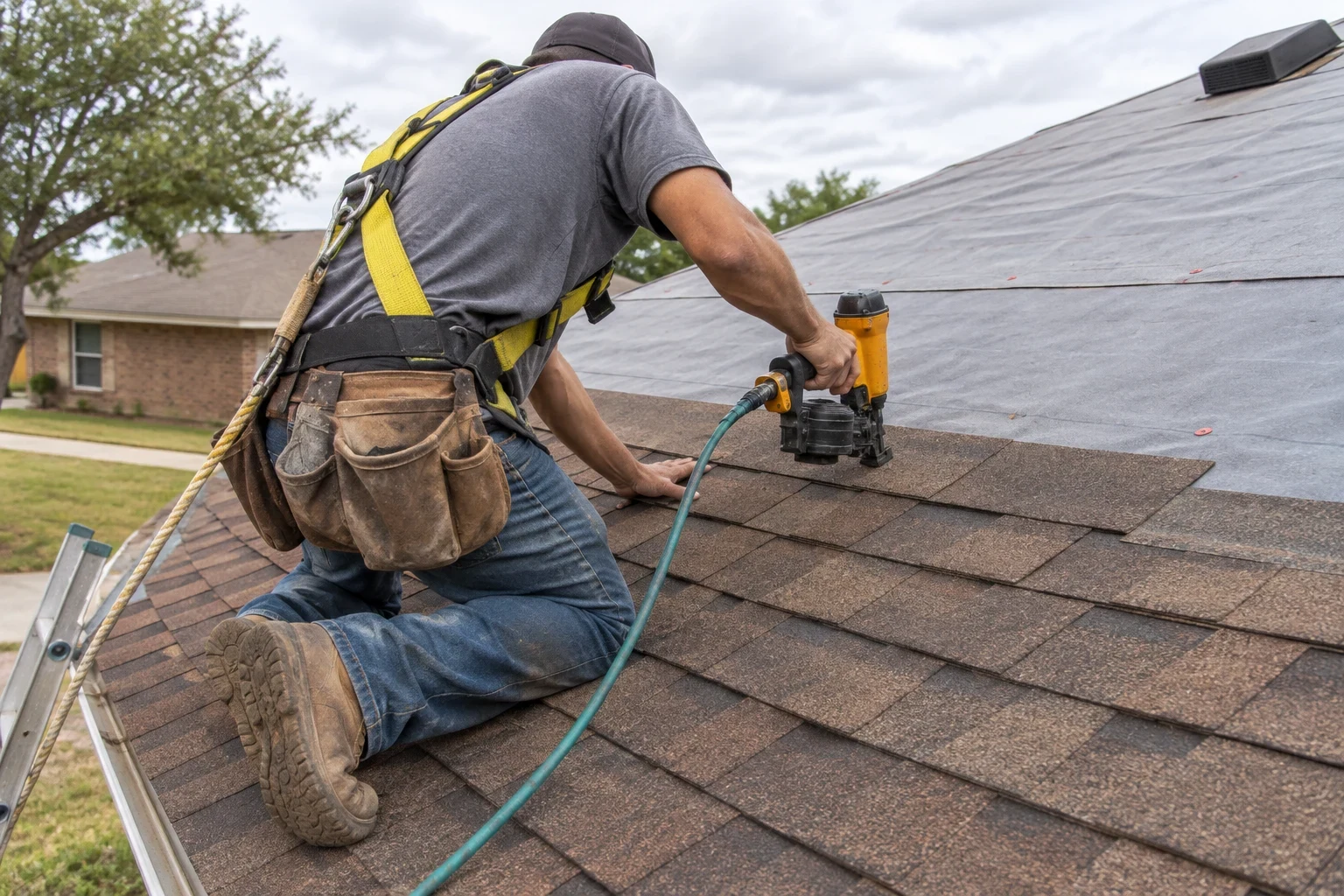
A new roof starts with what is under the old one
A home's roof is a whole system for keeping water out: decking, underlayment, flashing, ventilation and the shingles visible from the street. On newer houses those pieces generally fit together. On older ones they often don't. A past crew may have laid a second layer over the first, kept rusted valley metal, or dabbed roofing cement on a leak rather than fixing the flashing behind it.
So every job we do goes down to bare wood. Decking can't be judged through two layers of asphalt, and new flashing can't sit properly against brick or siding until the old pieces come off. We are a licensed roofing company with 10 years of experience uncovering roofs like these, and the hidden trouble usually shows up in the same spots: around chimneys, where low-slope porches tie in, and along eaves that never had drip edge.
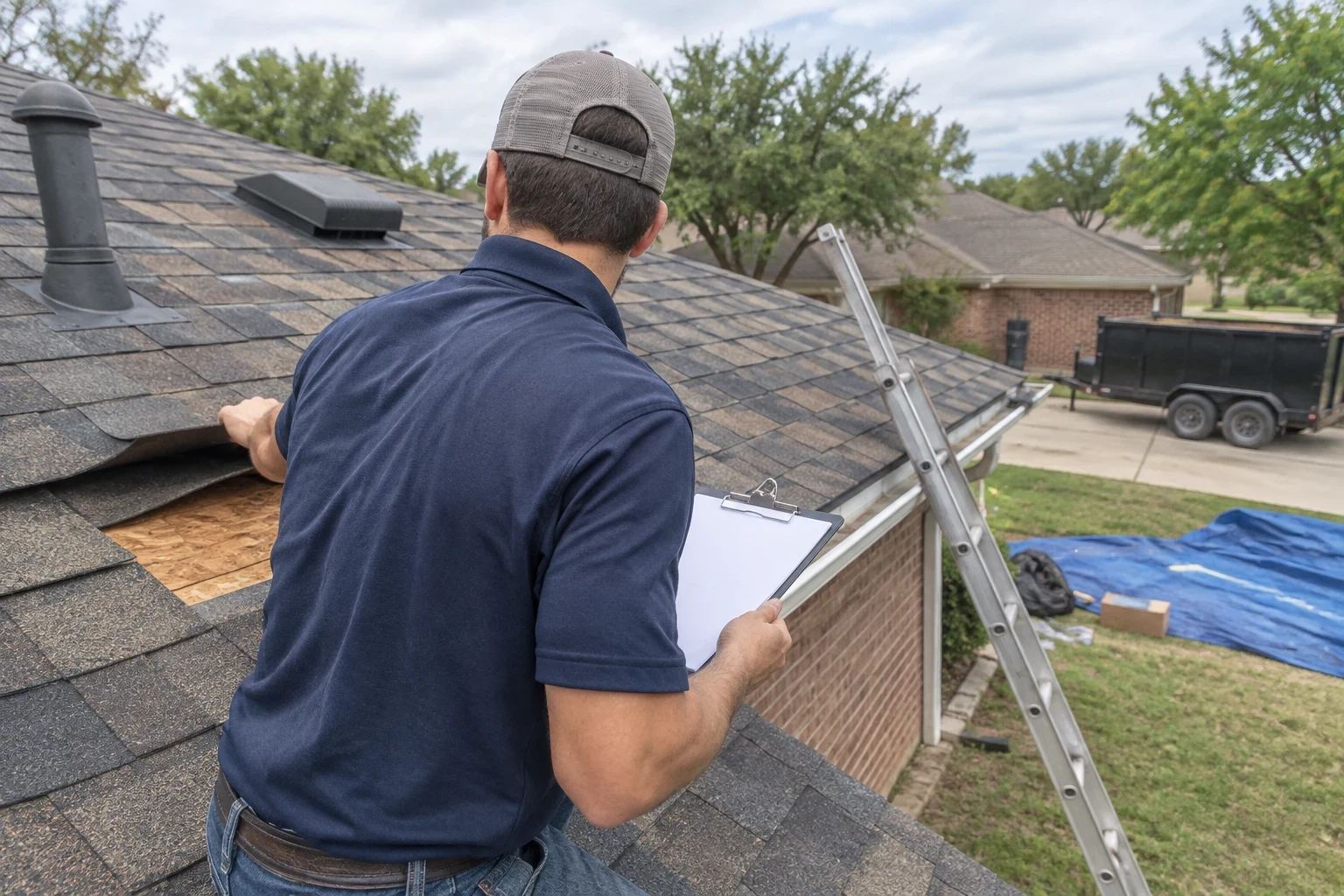
What a roof from us includes
- 01
Old layers stripped to bare wood
Each shingle course comes off along with the felt beneath it, every old nail gets pulled, and the debris leaves your property with us. Laying new shingles on top of old ones loads the rafters with extra weight and covers up rot, so that shortcut is off the table.
- 02
Decking checked and corrected
Houses built decades ago often have 1x6 plank boards instead of plywood, sometimes with gaps wide enough that nails miss. We replace soft or split boards and add sheathing where the gaps are too wide to hold fasteners properly.
- 03
Synthetic underlayment and ice-and-water membrane
Synthetic underlayment holds up better than old 15-pound felt if the deck sits open for a day. We add self-adhering membrane in valleys and around penetrations, where water concentrates.
- 04
New flashing, not reused
Step flashing, counterflashing at chimneys, pipe boots and drip edge all go on new. Rubber pipe boots crack in Texas sun long before shingles wear out, so reusing them only moves the next leak a few years closer.
- 05
Ventilation balanced to the attic
Attics from past decades often have one turbine or a few small box vents and painted-over soffits. We look at intake and exhaust together, because a hot, poorly vented attic shortens shingle life and pushes up cooling bills.
- 06
Cleanup and nail pickup
Tarps go over flower beds and against the walls before the first shingles come off. Once the roof is done, a rolling magnet works the lawn, drive and walkways to catch stray nails.
Questions about Residential Roofing?
Call(972) 640-4215Signs your home is ready for a new roof
Shingle grit washing out of the downspouts
Aging asphalt shingles lose their mineral surface. When the asphalt below is left bare, sunlight wears it down fast and the shingles get brittle.
Shingle edges that curl or cup
Shingles lift at the edges when the asphalt dries out or the attic gets too hot. Raised tabs catch the wind and let rain blow under them.
A dip along the ridge or between rafters
An uneven roofline often means the decking is wet and coming apart, or the boards have bent under added shingle layers. In both cases the trouble sits below the shingles.
One patch layered over another
Tar around the chimney, odd-colored shingles in a corner, caulk around every pipe. A string of spot repairs on an older roof usually means the flashing underneath has given out.
Stains on a ceiling or the attic deck
Dark rings under the roof deck mark where water has been coming in, sometimes for years before any ceiling shows it.
How the job runs
- 1
Free estimate on the roof
We walk the roof and the attic, count layers at the eave, check decking from below, and note every flashing point. You get a written estimate with each item listed separately, plus photos of what we saw.
- 2
Materials and schedule
We go over shingle options and colors with you, order materials, and set a day with a dry forecast. Heavy rain and high wind both push a start date, and we would rather wait than leave a deck open.
- 3
Tear-off and deck work
The crew strips the roof one section at a time, so only a portion of the deck is ever exposed. If we find rotted planks or missing sheathing, we photograph it and talk with you before replacing it.
- 4
Install and final look together
Underlayment, flashing, ventilation and shingles go on in that order. After the last ridge cap is set, we meet you outside, show you the deck photos from tear-off day, and point out which parts of the job our workmanship warranty applies to.
What sets the price of a new roof
Two houses the same size can price very differently, and on older homes most of the gap comes from what sits under the shingles. Each part of the job gets its own line, so nothing is folded into one lump number. If opening the roof turns up more rot than we expected, we show you photos and agree on it with you before doing that work.
- Roof size and pitch
- Total squares set the material order. Steep pitches need extra safety setup and slow the crew down.
- Number of layers coming off
- A second or third layer means more labor, more weight hauled off and more disposal fees.
- Decking condition
- Replacing soft planks, or sheathing over gapped boards, is often the biggest unknown on a house with its original deck.
- Penetrations and transitions
- Chimneys, skylights, dormers and porch tie-ins each need their own flashing. More of them means more hand work.
- Shingle line chosen
- Standard architectural shingles, impact-rated products and premium lines are priced differently, and we explain how they compare.
Questions homeowners ask about a new roof
Can you lay the new shingles over my existing roof?
We don't do roof-overs. A second layer hides bad decking, holds in heat and gives new shingles an uneven surface to seal against. It also leaves the next roofer two layers to tear off instead of one. Taking the old roof off is the only way we can fix the deck and flashing properly.
My roof deck has spaces between the boards. Is that a problem?
It can be. Older wood shingle roofs were usually nailed to spaced planks, and modern shingle nails need solid wood to grip. When the gaps are too wide, we cover the boards with sheathing so every nail holds. If your house looks likely to need it, we tell you during the estimate.
Which shingles stand up best to hail and hot summers?
Architectural shingles are the usual choice, because their thicker layered build handles heat and wind better than flat three-tab. Impact-rated shingles cost more but resist hail damage, and some insurance companies consider that rating. We bring samples to the estimate and explain the tradeoffs for your house.
Is there a warranty on the new roof?
Our workmanship warranty applies to eligible projects, and its coverage depends on the service. We go over what covers your roof before you sign, so you know where you stand.
How many days will the roof take?
After tear-off starts, most homes take a day or two, depending on the size, the pitch and how much deck repair turns up. We work one section at a time so the whole house is never open, and you can stay home the entire time.
Do you roof houses outside Combine?
Yes. We also work on homes in Seagoville, Crandall, Forney, Mesquite, Kaufman and the nearby towns.
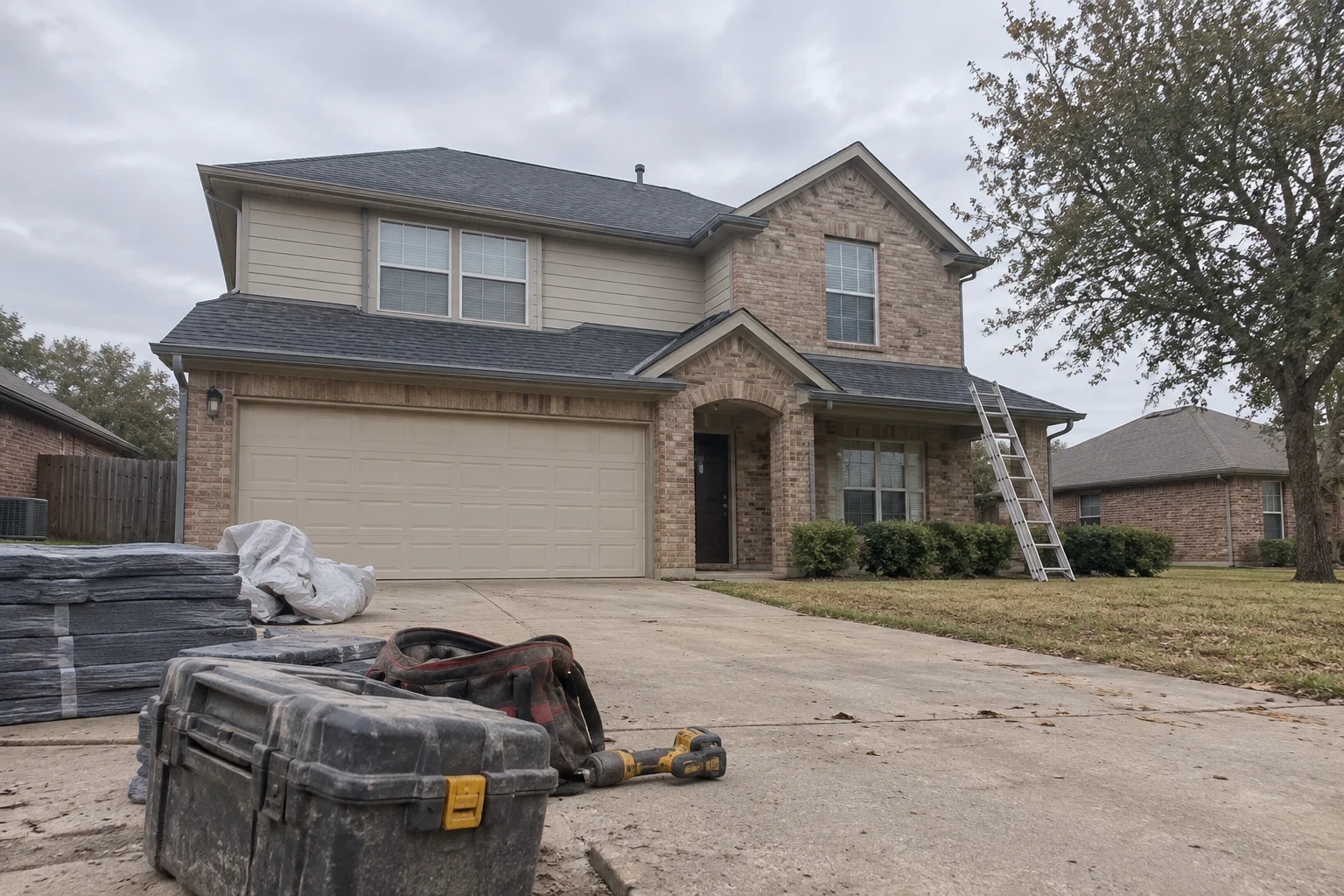
Find out what is under your shingles
We will check your roof and attic, count the layers, and give you a written, line-by-line estimate at no charge.