ServicesCommercial Roofing
Commercial Roofing Services in Combine, TX
We put low-slope and metal roof systems on small commercial buildings, and we take extra care with older roofs that hold layers of earlier work. Before we name a price, you see what sits under the membrane, and the finished roof sends water where it belongs.
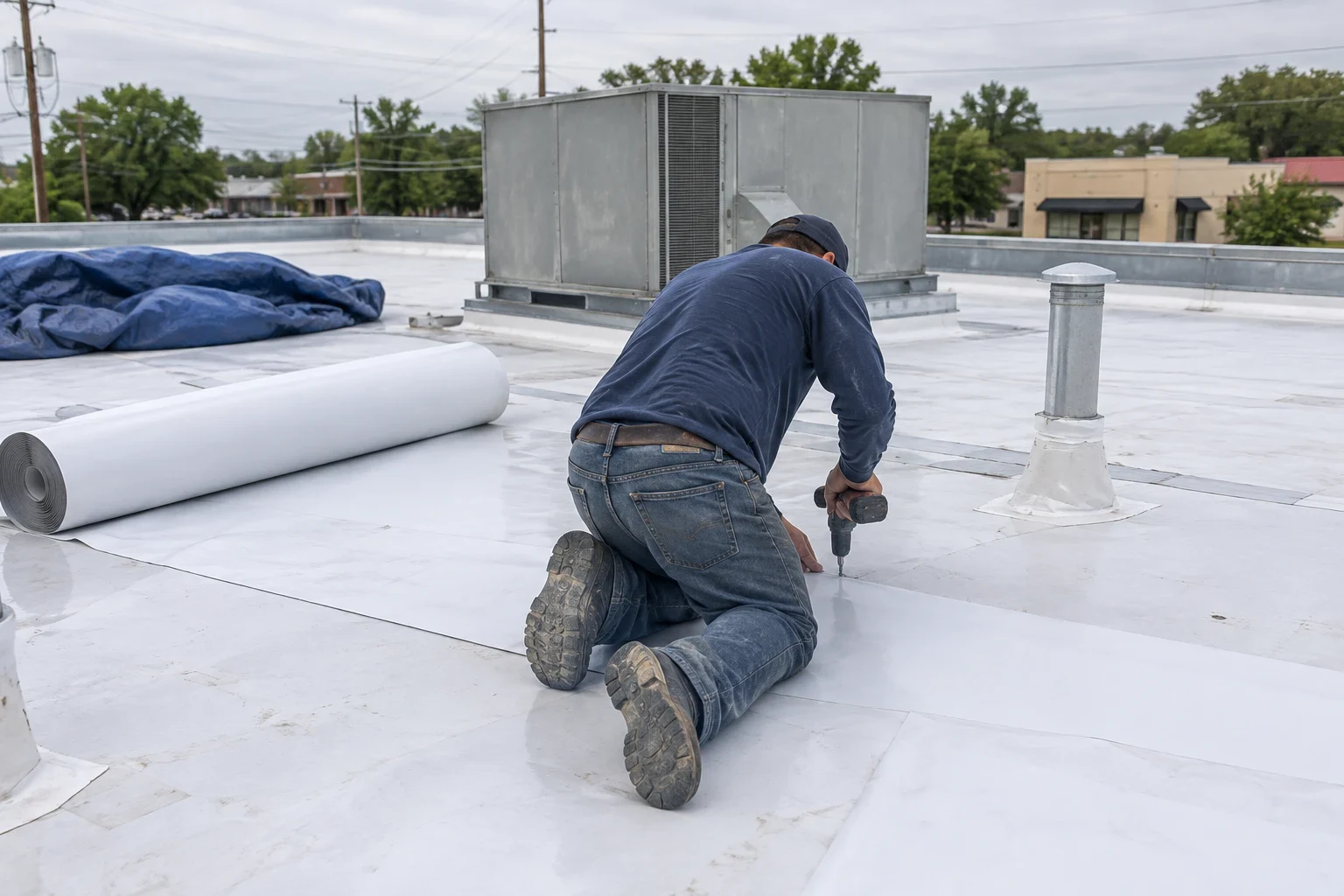
Roof systems built for the building you actually have
Most commercial roofs around Combine sit on low slopes, where water moves slowly and every seam, drain and flashing has to do its job. On an older building the membrane you see is often the newest part. Underneath there may be a second roof, wet polyiso insulation or a steel deck starting to rust at the flutes.
That is why we start below the surface. We take core cuts and moisture readings, look at how water leaves the roof and note old curbs, patches and penetrations left from earlier tenants. The roof system we recommend follows from what we find, not from a standard package.
We are licensed and bring 10 years of experience to the work. We serve Combine along with Seagoville, Crandall, Forney, Mesquite and the surrounding area.
What a commercial roofing project includes
- Core cuts and moisture mapping
- We cut small test samples to count layers and check insulation, then read moisture across the field. Wet insulation loses its R-value and traps water against the deck, so it has to come out.
- Membrane or metal system
- We install TPO, modified bitumen or metal panel systems. Each handles heat, foot traffic and movement differently, and we explain which suits your roof and why.
- Sloped insulation and crickets
- Water that sits on a flat roof keeps the membrane wet and loads the deck with extra pounds per square foot. We lay tapered boards and build crickets behind curbs so runoff heads to the drains and scuppers and the surface dries soon after a storm.
- Flashing at curbs, parapets and walls
- Most leaks on older buildings start at transitions. We flash rooftop unit curbs, pipe boots, parapet walls and edge metal as part of the system, not as an afterthought.
- Removing dead penetrations
- Abandoned exhaust stacks and old HVAC curbs are common on buildings that have changed tenants. We remove what no longer serves a purpose and close the deck properly.
Signs your commercial roof is due for attention
Water standing after rain
Ponds that last more than 48 hours point to sagging deck, crushed insulation or blocked drains. The weight and constant wetting speed up membrane breakdown.
Blisters, splits or alligatored surfaces
Built-up and modified bitumen roofs dry out and crack after years of North Texas sun. Once the surface opens, water reaches the felts below.
Stains along interior walls
Ceiling stains near exterior walls usually trace back to parapet flashing or failed edge metal, not the open field of the roof.
A roof that feels soft underfoot
Spongy spots mean wet insulation or a deteriorating deck. That condition spreads and should be assessed before it reaches the structure.
Patch on patch
If your roof shows years of mastic and mismatched membrane, the original system has likely reached its end and more patches will not hold.
What sets the cost of a commercial roof
Every price we give comes from measurements and core samples on your roof. Two buildings of the same size can differ widely once you account for layers, wet insulation and drainage. Here is what moves the number.
Square footage and roof shape
Larger, open roofs cost less per square than small roofs broken up by parapets, level changes and many corners.
Existing layers and deck condition
Code generally limits how many roof coverings can stack. A building that already has two needs a full tear-off, and any rusted or rotten deck found must be replaced.
System and insulation thickness
TPO, modified bitumen and metal differ in material and labor. Thicker insulation or tapered layouts add cost up front and lower cooling loads over time.
Penetrations, curbs and access
Every unit curb, vent and drain needs its own flashing. Tight access that requires a lift or crane, or work outside business hours, also affects labor.
How the work runs, from first call to final walk
- 1
Phone call and site visit
You call, we set a time to walk the roof and see the building's layout, access and how you use the space below.
- 2
Written, line-item estimate
We show you photos and core samples, explain what we found and give a written estimate that lists each part of the work. No vague totals.
- 3
Permit filed, dates set
Our office handles the city permit. Start dates and daily crew hours are fit to when you are open, when trucks arrive and where people park, so the work gets in your way as little as possible.
- 4
Installation in watertight sections
Each morning the crew sizes the tear-off to what it can fully dry in by quitting time. Every opened area gets new insulation and membrane or a sealed temporary cover before anyone leaves, so rain that rolls in overnight stays off your inventory and offices.
- 5
Cleanup and closeout
We remove debris, run a magnet over the lot for fasteners and walk the finished roof with you, including drains and flashing details.
Common commercial roofing questions
Does my business need to close during the roofing work?
In most cases you stay open. We stage material pallets in a corner of the lot away from your entrances, and staff and customers keep a clear path inside. Tear-off is the loudest stage, so you pick its hours. Before we start, we go over your business hours and delivery times with you.
Can you install the new roof over the current one?
Sometimes. If there is only one roof now, the core cuts show dry insulation and the deck is sound, a recover can work well. If two layers are already there or the insulation is wet, we recommend tearing off, because trapped moisture will ruin the new system from underneath.
Which roof system fits my building?
It depends on the slope, how much foot traffic the roof gets and what equipment sits on it. TPO reflects heat and works on wide, open roofs. Modified bitumen stands up to foot traffic around equipment, and metal panels fit low-pitched buildings with enough slope to drain.
What if tear-off uncovers damage under the membrane?
It happens on older buildings, most often as rusted deck flutes or wet insulation near the drains. We stop, photograph it and show you before any extra work. Your written estimate already lists the unit price for replacing deck and insulation, so you know the cost in advance.
Does the work come with a warranty?
Our workmanship warranty covers eligible projects, and coverage depends on the service. Your written estimate states what applies to your roof system before work begins.
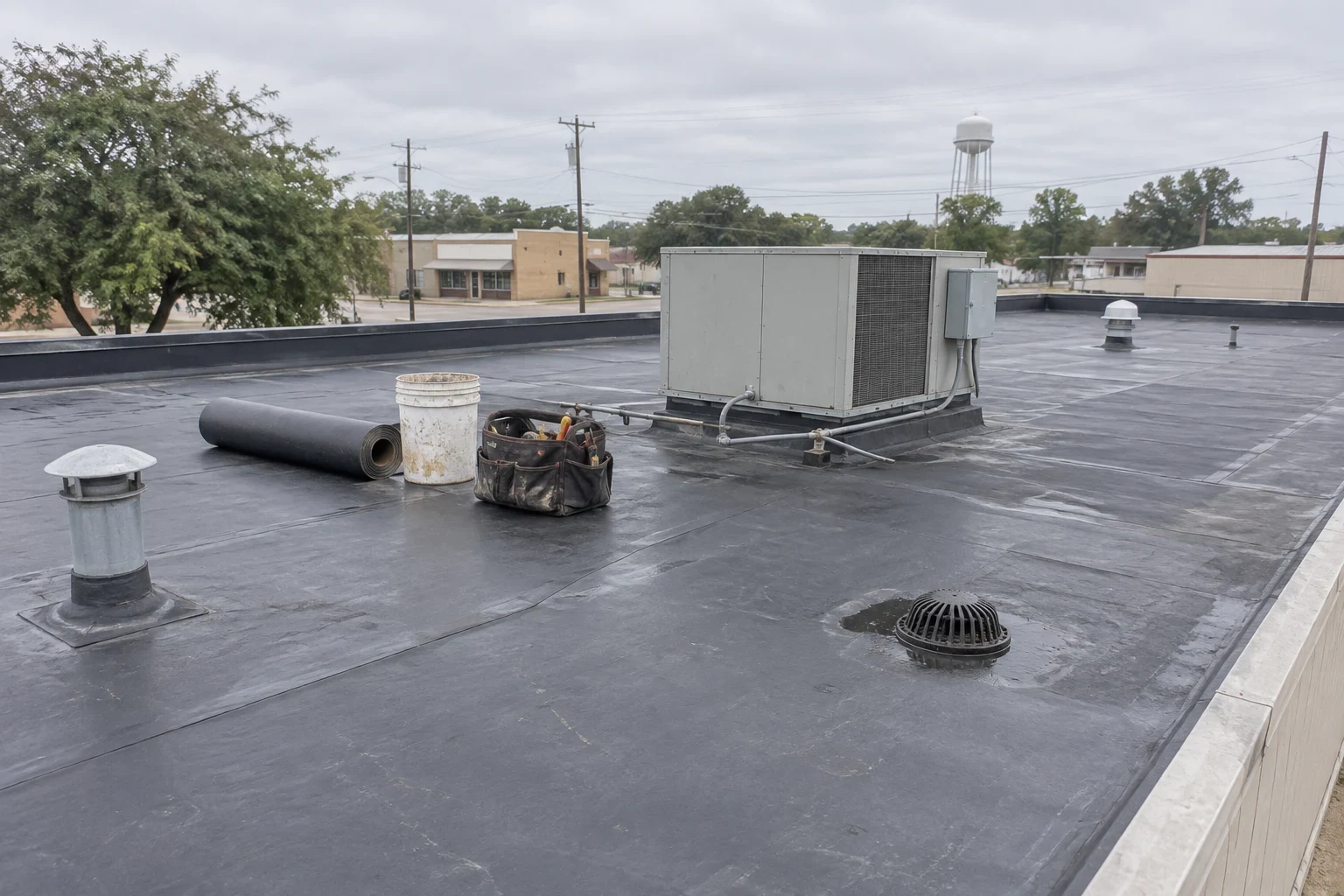
Find out what is really under your roof
Call us to set up a visit. We will cut cores, show you what we find and put the estimate in writing at no cost to you.